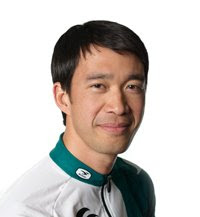
Like Dustin Hoffman in Rain Main, I find myself walking around mumbling numbers – sleepless and restless, thinking about numbers. What are the target numbers, what’s a stretch goal, what is an optimistic number? Can I swim in average time or am I going to be the last 10% again? Is the condition good to do an amazing fast time on the bike or will the wind damping any numbers there? Run training has ranged from 6:40-8:30 long runs. What pace should I do in Cozumel’s humid and hot conditions – after a 112 mile bike? What time should I get up the morning of the race day? How many calories should I consume – day before, breakfast, during the bike and run? How about electrolytes? What about frogs? I like frogs. Number, number, numbers.
The Scene
El Cozumeleno resort is situated at the northern part of the island. Its classic Mediterranean architecture is dressed in peach tones and pastel stucco of the Caribbean. It sits on top of its own private and well-manicured beach. The northern beaches are very rocky and El Cozumeleno’s beach probably being the least rocky of any near-by resorts. No matter what, the palm tree lined beach with the warm turquois water can’t be beat. Although showing its age (probably dating back to the 80s), El Cozumeleno is pretty amazingly well kept. A legion of staff keeps this place humming all day, from cleaning to preparing for meals to hosting to entertainment. With an all-inclusive, a drink, snack, or meal is at your whim. Everyone is amazingly friendly and helpful. It’s roughly a three-mile walk to downtown Cozumel or an 80 peso ($7 US) taxi ride. From what I can tell, this is probably the best option (amenities, beach, and location) of the race host hotels, which is on the run race course.
Downtown Cozumel also has a bit of past prime feel, but more authentic then say Cancun or Playa de Carmen -- just on the other side of the water. The streets facing the sea are lined with restaurants, bars, jewelry, Cuban cigar, and souvenir shops all designed to attract the cruise ship passengers. Although vocal, the hawkers of goods are not as aggressive as their counterparts in Playa de Carmen. Booze flow freely here and is extremely affordable. It is a key ingredient to the lively atmosphere at places like Senior Frog or Margaritaville. For a more genuine Mexican experience, walk back a few blocks to where the locals live.
Ironman Cozumel is a clear boost to the local economy and the locals will tell you it’s important. More importantly, they celebrate the event as though it is a national holiday. Everything gets a fresh coat of paint and decorations go up. Energy begins to build at the center of town as all the preparation for the races begins a few days before the race. People are genuinely supportive of the athletes. I’ve arrived a week before the race and every bike and run I did was met with claps and cheer as I went by with shouts of “Ironman.” With only a day to go, I can’t even imagine what it’s going to be like with the majority of the island descending on downtown Cozumel.
The Numbers
Less than 24 hours now. I’m feeling dazed from several days of sleeplessness (less than 4hrs of sleep each night) trying to force myself to the “Ironman time” with no success – last chance to bring this together tonight (or totally be in a bad state). In my current haze, even the neurosis of numbers begins to wane. So what are my goals? Truly, I would like to set a new personal best time for an Ironman and at each leg. How that would break down is something like this, including transitions:
• Swim – 1:30
• Bike – 5:40
• Run – 4:50
Now on to the final gear check and check-in.
Saturday, November 26, 2011

Saturday, November 12, 2011
training to be a super hero (road to ironman cozumel)
My nieces and nephew decided one day to do an intervention and asked me why I always wear super skin tight clothes. Are you trying to be a super hero or something? I looked into their inquisitive eyes and answered with a resounding yes. Ages ranging from 5 to 10, I get rolling eyes from the girls and a very energetic challenge from the 5 year old boy to demonstrate my abilities. Apparently, demonstrating I can out run a 5 year old wasn’t sufficient for him. Even though, I made it definitive.
 Fast forward, I find myself as a mild manner product owner for an amazingly awesome social entertainment site by day (http://live.xbox.com/AvatarEditor/ even if I say so myself) and a super hero in training by night. The journey for super powers so far has been unsuccessful. I found it difficult to create a radioactive spider (all squashed by my wife), find a government program for super soldiers, or search Ebay for super hero gear (at least nothing in my price range). So I reflected inwards and meditated on the great teachings of George Lucas -- still nothing.
With less than 8 weeks between races, including recovery and taper, what would Ironman Cozumel look like? Unfortunately, I came out of Grand Columbian with a knee injury and my rush to start training again resulted in an ankle injury as well. Now with two weeks remaining, my knee and ankle are still injured and slowly mending. Of course, I had to significantly reduce my run and bike volume to allow my injuries to recover, which will make doing an Ironman more challenging. At least, I had time to get some swim coaching (from Ben Bigglestone from VO2 Multisport), hoping to offset the reduced run and bike training. With some tweaks to my technique, in training I noted some of the fastest continuous 100 yard times. A glimmer. So with only two weeks left until Ironman Cozumel, will the glimmers of strength within win or will the injuries and race conditions prevail. Oh the drama -- stay tuned.
In the end, I hope I can show my nieces and nephew that everyone has super powers deep inside. So if you wonder where I’ve been, why I’ve not blogged. I’ve been training to be a super hero.
definition: super powers – going beyond what you believe is possible.
 Fast forward, I find myself as a mild manner product owner for an amazingly awesome social entertainment site by day (http://live.xbox.com/AvatarEditor/ even if I say so myself) and a super hero in training by night. The journey for super powers so far has been unsuccessful. I found it difficult to create a radioactive spider (all squashed by my wife), find a government program for super soldiers, or search Ebay for super hero gear (at least nothing in my price range). So I reflected inwards and meditated on the great teachings of George Lucas -- still nothing.
Disheartened, this was the year to admit to the kids I didn’t have super powers. Then there were some glimmers of hope. In April, after a couple of years of no progress, there was a new personal best at 1:36 for the Race of the Roses half-marathon. A glimmer. Stagnant on the bike and not looking to see any improvement on long course triathlon races, I clocked a sub-2:30 for 56 miles (Ocean Shores Half-Iron Triathlon) with pace of near 23 mph (with winds blowing 15+ mph). With a personal best half-iron run, I took the win in my small age group. A glimmer. Then a fateful decision in late July, I will do Grand Columbian Iron-Distance triathlon in September and Ironman Cozumel in November. From zero to two iron distance races in 4 months.
I was discovering my inner force (thanks George). Training was going well, even with only 6 weeks to prepare for the Grand Columbian race. I was knocking out the fastest training runs and rides in two years. Then 4 days before the race, I started to come down with a cold. Things looked hopeless the day before the race with headaches and congestion, making it hard to breathe. The weather too wasn’t going to cooperate with winds constant at 20+ with gust upwards of 40 mph. Even so, I made a go of it. With only 50 people racing at that distance, it was unique to be able to know where you were within the group. It was a fun game of counting. Here’s how my race went: came out of the water in 43rd after a 2.4 mile swim, I had 112 miles of biking and progressed up to 18th, after 10 miles of the run I was 8th overall and tracking all the leaders on the two loops out and back, at mile 12 I was thinking of who ahead would blow up and allow me to continue to progress up the ranks, at mile 15-18 I blew up and was doing the zombie walk from sleepiness (sleeping only 3 hrs the night before), after heavy doses of cola I started running at mile 18 and finish 13th overall after the marathon. In the end, it was one of my most fun races, even if it’s not my fastest.
With less than 8 weeks between races, including recovery and taper, what would Ironman Cozumel look like? Unfortunately, I came out of Grand Columbian with a knee injury and my rush to start training again resulted in an ankle injury as well. Now with two weeks remaining, my knee and ankle are still injured and slowly mending. Of course, I had to significantly reduce my run and bike volume to allow my injuries to recover, which will make doing an Ironman more challenging. At least, I had time to get some swim coaching (from Ben Bigglestone from VO2 Multisport), hoping to offset the reduced run and bike training. With some tweaks to my technique, in training I noted some of the fastest continuous 100 yard times. A glimmer. So with only two weeks left until Ironman Cozumel, will the glimmers of strength within win or will the injuries and race conditions prevail. Oh the drama -- stay tuned.
In the end, I hope I can show my nieces and nephew that everyone has super powers deep inside. So if you wonder where I’ve been, why I’ve not blogged. I’ve been training to be a super hero.
definition: super powers – going beyond what you believe is possible.
Monday, January 3, 2011
good on ya mate (new zealand southern alps with pedaltours)
For those comic book fans, you don’t have to create a ray that bends time and space or duplicate people or worlds to create an alternate reality. All you have to do is jump on a plane and head to New Zealand. New Zealand is reminiscent of a Bizzaro world to our own (here in the States), mostly the same but quirkily different.
There are the basics such as their summer is our winter, they drive on the left side of the road, and even the water spirals in the opposite direction. If you dive deeper, you will find even more abnormalities. Customs officers who greet you with a smile and a story when you enter the country to the hotel staff that wants to strike up a conversation about where you are from to the smiley moms and kids at the park that always say hi. That’s some strange stuff. It’s one of those places you still feel comfortable leaving your doors unlock and where police officers, although austere, still don’t carry guns. Weird. A country where the sheep population almost outnumber the people and a country so stunning, even on the rainiest days the veil of rain and clouds cannot diminish its beauty. A true Bizzaro world and the reason we came to this alternate reality.
Select full screen to get the best experience.
The Expedition
We had 3 weeks’ time to explore New Zealand both the north and south island. We started with the north island and down time in Auckland to acclimate to the summer weather, culture, and language (yes, it’s English), but also to discover a bit about the north island lifestyle. Then head to the south island to cycle (and hike) the high passes of the Southern Alps, guided by Pedaltours, a New Zealand cycling guide service.
The tour of the Southern Alps is made for cycling enthusiast (with daily rides of 40 to 95 miles with some challenging climbs), especially cyclists who enjoy beautiful scenery and gourmet local foods.
Tip: Train and be fit enough to ride some of the most amazing routes you can imagine. Riding in the shuttle is not fun and if you want a bus tour, there are other cheaper options.
The Cast
Traveling is about the people as much as it is about everything else. Most of Pedaltours’ customers are from the States, which was true for our group as well. We had 4 Americans, 2 Brits, and our New Zealand guide. The trip is on the more expensive side, so it attracts a more affluent group, which you can translate as older. The median age would be around 50 and Isabella and I being the youngest of the group. With enthusiast cyclists, age really doesn’t matter.
The biggest expectation difference in our group was probably the divide between casual socials and cycling focus adventure versus the formal intellectual interactions and plush daily comforts. In the end our guide, Bill, was able to bridge the gap to keep the tour interesting for everyone.
The guide sets the tone for the group and Bill is a good guy to have on this tour. He’s a well-seasoned guide and has ample knowledge of the area, history, and culture. Bill is personable, always willing to joke and tell stories. He is also forthright and calls out issues for the group that sometime can make you squirm in discomfort until you get to understand that’s his style. He is the young travelling backpacker (at heart) still looking for an adventure and you get to see the experience through those eyes, which is great.
Tip: Each group is going to be different. Come with the willingness to get to know people and leave personal baggage (strong personal beliefs) a home.
The Adventure
The adventure is in the not knowing. Not knowing how challenging the climbs are, what you would see, or who you would meet are all parts of it, but sometimes the wrong turn or adverse weather is also what makes the adventure exciting and fun.
The window of our trip was just bad in terms of weather. We had a low pressure system that created typhoon like weather. We had torrential rainfall for multiple days and in one of the wettest area we had something like 44 cm (about 17 inches) in one day which led to epic flooding, but the consolation was that it was warm and manageable as long as you don’t mind being wet. When the rain subsided a little, we had epic winds that were constantly blowing above 25 mph and gusts that were fearsome when you were descending some of the long steep descents. In the first week, the wind was mostly at our backs, but when we change direction to head back up north, they were suppressive. For me, it was great fun and good training for my offseason.
I rode most of the course, except for the areas deemed to be hazardous to attempt (floods or landslide risk), and covered nearly 700 miles (around 1100 km) on the bike. Most days you can do many thousands of feet of climbing and I wanted to do them all. Porter’s Pass was around 3000 feet (930 m) in one climb, which was probably the biggest, but there were many that rival that as well. You can get your heart pumping in the climbing or on the amazing descents. There is no better way to see the New Zealand countryside and mountain ranges except on the bike.
Farming still plays a prominent role in New Zealand. No matter what size farm you run, you can still make a reasonable living on a farm. In the final days of the tour, you get to stay on a farm and talk to the farmers about their way of life. You get a voyeuristic view in to someone else's life and a much deeper appreciation for New Zealand and its lifestyle.
Check out http://www.pedaltours.co.nz/southern-alps-15-days/ for the details of each day. When it wasn’t raining, I quickly pulled out one of 4 cameras we brought with us on the trip (none waterproof). At the beginning is a montage of photos and videos of our 15-day adventure, giving you a glimpse of what we saw each day of the trip.
Tip: You have to have that adventurer's spirit or else this is not the trip for you.
Tip: Bring good rain and wind gear no matter when you go. The rainforest rains around 5 meters a year, so expect it to rain when you are there.
Tip: For 3 weeks after Christmas, New Zealanders go on holiday and the single-lane highways are super busy with buses and campervans. Pedaltours will likely avoid this time for tours, but we did experience that traffic as our trips ends a few days after Christmas.
Tip: If you like crispy bacon, New Zealand is not where you are going to find it. In most restaurants and cafes, the bacon is more flavorful than the one we have back in the States.
Tip: Try the flat white coffee, which has a more refine foam then cappuccinos and lattes with generally more milk. It’s something unlikely to get outside of New Zealand and worth trying. Generally coffee in New Zealand lacks the caffeine punch of its counterpart here in the States or Europe. You may need an extra cup.
Tip: Letting the ingredient shine often means little seasoning. Generally New Zealand cuisine lacks a bit of salt. You can always add it. For bold flavors, pastas are generally a good choice.
Tip: Although, not part of the tour. New Zealand’s best degustation menu can be found at Pescatore in Christchurch. Probably one of the best 9-course meals we’ve ever had anywhere and we love food. There were great complex flavors and techniques rarely used except on Iron Chef. The wine pairing also gives you a good tour of the country’s wine regions. It’s not cheap, but worth the outing, if you enjoy food.
Tip: Don’t say trash, use rubbish. Rubbish is used extensively in conversation as well, which as you may guess is a negative term.
The Final Word
This is a must do cycling tour if you are a cycling enthusiast and want to see some of the most beautiful scenery in the world, meet great people, and enjoy a variety of cuisine. The measure of a great trips are the memories (which we have many) and how homesick you are at the end (we were not at all ready to go home). It was an amazing trip. Probably the only drawback of this trip is the cost and it being out of reach for a younger clientele.
In the end, who lives in the Bizzaro world is hard to discern, is it us in the State and Europe or the New Zealanders. One thing is for sure, New Zealand is beautiful, peaceful, and its people are friendly and welcoming.
Monday, August 30, 2010
the sum up (ironman canada)
At the end of No Reservations, Anthony Bourdain always does a sum up of the trip, the people, the food, the experience, providing the final thoughts of the episode. I wonder how I would sum up my Ironman Canada experience -- maybe in a similar way.
Check out the IMC athlete's video. Yours truly is in it at about 25 seconds in. You will need the flash player installed.
The Journey
For many (and me), the journey is about training to discover and understand, to have fun and relax, and to improve fitness and health. No doubt to train for an Ironman, you have to sacrifice—be careful about eating that 12th donut for breakfast, giving up going to your 4th cousin’s wedding (who you don’t know), sitting in a car daily for a commute, and absolutely no 4-plus hours a day of TV watching (like the average American family). Yes, true sacrifices. Of course, people with children and other life obligation may not find it as easy as I did, but I would trade a few hours of TV watching to experience the Ironman.
I never found myself connected to electrodes and face bounded by a mask running and biking so hard it would make you want to puke to measure VO2. I never tried active release or massage therapy. I never even got my bike fitted with a magical technique to improve my bike power. Heck I never even had a coach. There’s an argument that maybe I should have done some of these, but I went pretty much old school. Listen to your body, make adjustments, and put in the hours.
Do you have to put in a crazy number of hours training to do an ironman? Almost all my training is done during my commute time. My official ironman training was less than 10 weeks, where I started mixing in more running and swimming. For example before this, I barely did any swimming. It’s good to note I had a good base of endurance, mainly from biking. However, my average monthly training is 45 hours until July and August, where it went up to 70 hours. In the final months my training comprised of many 2-3 hour weekday brick workouts, 3 times a week of swimming, and long weekends of 8-10 hours with long bike and runs. I just adapt based on how I felt, any injuries, or work or personal obligations. The point was always to keep it fun and continue to make progress.
 Somehow in the morning I felt a little like a lemming marching to the start (or my end). I got my body marked, dropped off my special needs bags, stretched, then got my wetsuit on and headed to the swim start. I planned on launching my day from the far left and pretty much in the back of the swim. The hope was to avoid the scrum (the washing machine effect - see video). After seeing Isabella on Lakeshore Drive and giving her a big smile and wave, I was ready to start. I pretty much swam in clear open water as I swam probably further to the left than I should. It wasn’t until the first major turn around the first houseboat before I had to really deal with folks. On the way back, since I was now on the buoy line I also picked up the pace. I dropped those I was swimming with and caught almost everyone I could see. That felt good, but finishing over 20 minutes slower than the average time and being the last couple of hundred people out of the water of nearly three thousand -- it wasn’t fast.

 It hurt, but it slowly subsided. The first three miles was around 8:40, but I was feeling low on energy and needed to consume a lot of calories at the different aid stations, which meant I had to start walking parts of them. My biggest concern was my right knee. It wasn’t until mile 10 when I was climbing the first real hill that my knee started hurting. I plan to be conservative until I was confident the run was well in hand. Eventually, even the downhill running part started hurting so I ended up walking those as well. It’s a pretty slow hill section of between 6 to 7 miles. Back on the flat I ran more regularly to make sure I finish less than 5 hours for the marathon.
The Sum Up


Check out the IMC athlete's video. Yours truly is in it at about 25 seconds in. You will need the flash player installed.
The Journey
For many (and me), the journey is about training to discover and understand, to have fun and relax, and to improve fitness and health. No doubt to train for an Ironman, you have to sacrifice—be careful about eating that 12th donut for breakfast, giving up going to your 4th cousin’s wedding (who you don’t know), sitting in a car daily for a commute, and absolutely no 4-plus hours a day of TV watching (like the average American family). Yes, true sacrifices. Of course, people with children and other life obligation may not find it as easy as I did, but I would trade a few hours of TV watching to experience the Ironman.
I never found myself connected to electrodes and face bounded by a mask running and biking so hard it would make you want to puke to measure VO2. I never tried active release or massage therapy. I never even got my bike fitted with a magical technique to improve my bike power. Heck I never even had a coach. There’s an argument that maybe I should have done some of these, but I went pretty much old school. Listen to your body, make adjustments, and put in the hours.
Do you have to put in a crazy number of hours training to do an ironman? Almost all my training is done during my commute time. My official ironman training was less than 10 weeks, where I started mixing in more running and swimming. For example before this, I barely did any swimming. It’s good to note I had a good base of endurance, mainly from biking. However, my average monthly training is 45 hours until July and August, where it went up to 70 hours. In the final months my training comprised of many 2-3 hour weekday brick workouts, 3 times a week of swimming, and long weekends of 8-10 hours with long bike and runs. I just adapt based on how I felt, any injuries, or work or personal obligations. The point was always to keep it fun and continue to make progress.
A friend posted on Facebook said to get fast your training has to hurt and I commented that would explain why I’m slow. Maybe next year, I’ll find out if I can improve by sprinkling in a little more hurt into my training.
The Big Day
It was going to be an early morning and I wanted to go to bed early. I was in bed by 8:30 pm, but then found myself up at 10:30. Oops. Fortunately, I was able to fall back to sleep and only woke once more before I decided to get up at 3:30 am. I made my yummy morning shake (blueberries, bananas, protein powder, orange juice, and honey). Isabella tells me it is around 800-1000 calories. More than I thought it would be. Oh yeah, she’s up too.
 Somehow in the morning I felt a little like a lemming marching to the start (or my end). I got my body marked, dropped off my special needs bags, stretched, then got my wetsuit on and headed to the swim start. I planned on launching my day from the far left and pretty much in the back of the swim. The hope was to avoid the scrum (the washing machine effect - see video). After seeing Isabella on Lakeshore Drive and giving her a big smile and wave, I was ready to start. I pretty much swam in clear open water as I swam probably further to the left than I should. It wasn’t until the first major turn around the first houseboat before I had to really deal with folks. On the way back, since I was now on the buoy line I also picked up the pace. I dropped those I was swimming with and caught almost everyone I could see. That felt good, but finishing over 20 minutes slower than the average time and being the last couple of hundred people out of the water of nearly three thousand -- it wasn’t fast.

The bike out to Osoyoos was fast and probably over 21 mph and indeed the first bike split time on the first Richter climb was near 21 mph average. At Richter, the weather was not going to cooperate as the (head) wind started to pick up just as we enter the big climbs and fast descents (speeds upwards of 50+ mph). I had to fight to keep my Zipp 808 tracking forward without being blown into traffic or competitors, but the rollers and the out and back were fast. At the base of the Yellow Lake climb the rain came with even more blustery winds, which made it challenging and slow. Once you crest Yellow Lake, it’s a pretty long fast descent back to Penticton. It’s an opportunity to get ready for the run, but making sure to maximize for as much speed as possible.
In T1, I was a little slow because the change tent was packed with no place to change. In T2, when I took off my biking shoes my left foot hurt. I couldn’t walk. I only had this once at the Wenatchee Omnium a couple of years ago, but that time I didn’t have to run a marathon and that time I also couldn’t walk on that foot for probably an hour. I quickly massage my foot and tried to walk. It hurt. As I limped through transition, I can see people’s expression of concern. After crossing the timing mat I was going to see how painful it was going to be.
In T1, I was a little slow because the change tent was packed with no place to change. In T2, when I took off my biking shoes my left foot hurt. I couldn’t walk. I only had this once at the Wenatchee Omnium a couple of years ago, but that time I didn’t have to run a marathon and that time I also couldn’t walk on that foot for probably an hour. I quickly massage my foot and tried to walk. It hurt. As I limped through transition, I can see people’s expression of concern. After crossing the timing mat I was going to see how painful it was going to be.
 It hurt, but it slowly subsided. The first three miles was around 8:40, but I was feeling low on energy and needed to consume a lot of calories at the different aid stations, which meant I had to start walking parts of them. My biggest concern was my right knee. It wasn’t until mile 10 when I was climbing the first real hill that my knee started hurting. I plan to be conservative until I was confident the run was well in hand. Eventually, even the downhill running part started hurting so I ended up walking those as well. It’s a pretty slow hill section of between 6 to 7 miles. Back on the flat I ran more regularly to make sure I finish less than 5 hours for the marathon.
Surprising, I felt really good at the finish with a faster last couple of miles. Maybe I was too conservative, maybe it’s the optimal temperature (I can’t imagine a hot day), maybe I took on liquids and nutrition at the best rate I’ve ever done without issues, or maybe it was the great (commute) training, but in any case I finish strong and was happy.
The Sum Up
10 months of training for the (bike, run, and triathlon) racing season.
10 weeks of Ironman specific training.
10 to 18 hours a week of training, most around 11 hours and 5 weeks around 18 hours.
12:28:07 finishing time (S - 1:33:49, T1 - 6:04, B – 5:43:12, T2 – 8:03, R – 4:56:59)
Spending time with my Isabella throughout the season -- priceless.


Saturday, August 28, 2010
contemplating (ironman-eve)

The atmosphere here is amazing. Just being around all these folks makes you believe that anything is possible (world peace, cure for cancer, my first ironman). What adds fuel to this fire is the amazing support from the town and community. It’s truly a four day festival of food, art, and competition. Be prepared if you ever show up to one of these events that you may have to do one the following year.
So as I was walking down Lake Shore Drive, I was contemplating what the circumstance might be like tomorrow. First the weather is predicted to be amazing, although being a day away I find it surprising that the crazy winds we have been having will go away by then. Assuming low-70s and a minimal wind day, what are my possibilities? Likely I will finish in something less than 14hr or not at all is my guess. My three biggest concerns are completing the swim, keeping up with nutrition, and knee pain during the run. After my last post I was able to complete two decent long runs, 17 and 21 miles, without much pain; although, I’ve never done a marathon after a long bike ride. So we will see. Here are my targets for sub-14hrs:
Swim – 1:45
Bike – 6:30Run – 5:30
I wonder how it all will work out. I guess I will know tomorrow.


Friday, August 6, 2010
why (ironman training so far)

Although with only three weeks left I question my own sanity trying to attempt it. If you've been following, I’ve crashed a couple of times right at the beginning of the year, which put my bike racing season in the rough (Senior Open was just here in Sahalee). I pushed through it and made my basic race goals. Though, it wasn’t a stellar year. With roughly 10 weeks after bike racing, I switched over to triathlon training. Well I felt like a fish out of water, a three legged cheetah, a featherless peacock -- you get the idea. I felt awkward ramping up in the run and especially the swim (where I wanted to be a fish in water). Then I got sick for a week and a half. I restarted again. Two and half weeks of solid training and threw down my best half-iron distance race at 5:09 and podium at the same time. It was a practice race so I can work out the kinks. Well I had a lot of kinks to work out. By the end of the race both of my feet were raw and bloody and severe chafing in other places. It took me at least a week to heal enough to train again in any of the events. That puts me at the here and now and why I still question my chances of finishing. I can’t run.
I’ve always had problems with my knees and any down time from running resets me to step one. I start off with three, then seven, then eleven miles (yes, I only run Fibonacci numbers), which takes a week or more to ramp up for each of these stages. Usually after a short hiatus from training I can still ramp-up quickly, but this time my knees are failing me. So with only two weeks of training and three before the race, I still am struggling with the run with a lot of knee pain. Can I get through this in the next couple of weeks? Sadly, beyond the risk of not being able to complete my first ironman, I know for a fact that a three-legged cheetah would still be faster than me.
So with only a few weeks left to go, I ask myself why? The answer is because I can (and I want a sexy body).
Sunday, May 23, 2010
the return (mutual of enumclaw stage race)

This was my last planned bike race of the year. It was probably the most fun I had in a race. Although, waking up on the second day of the race, the sky unleashed its anger -- cold and wet. The goal was to complete the hilly race. With a group of guys who came off the back we worked together to make that goal possible. It felt good, even with frozen fingers and extreme shakes afterwards.
MoE was one of SCCA/Starbucks team race and we were 20 strong with some great results. Below is a video montage of the first day and the start of the cat 3 criterium.
Sunday, May 16, 2010
stays the same (wenatchee omnium)
Wenatchee is an epic hill race and every year I look forward to the road race. It has a twelve mile climb and a descent that reminds me of the ones in the Pyrenees during the Tour. If you are one of the lucky (or unlucky) few you get to do it multiple times. This year the course was changed and the hill climb was shortened by half, leaving the hardest part of the climb to be done multiple times. The more things change, the more it stays the same. Some fun suffering. It was awesome.
As promised, some cat 3 crit action, where Wes timed it perfect for a top ten finish.
As promised, some cat 3 crit action, where Wes timed it perfect for a top ten finish.
Saturday, March 13, 2010
to sprint or not to sprint (tour de dung 2010/sequim one)
As we were getting lined up for the masters race start, rain crested the mountains behind us looking to chase us down during the race. Although it sprinkled a few drops to keep us cool during the hard efforts--it kept dry. As the day progressed, the wind got a bit stronger, making the crosswinds amazing to navigate.
Unlikely last week, where I beat myself the day before with a TT and a long run, this week I had a day off before this race. No excuses not to be a bit more competitive. The race was very interesting as we had to go neutral for another race field for part of the 3rd and 4th loop, which meant it was going to be mass sprint finish. I had decided not to sprint as we enter the last turn into the final 1k as people were already acting crazy trying to get position. With 200m left to go, I had a whole lane to myself as no one wanted to get into the wind, which was extremely blustery. So I decided to accelerate and made good ground which was surprising. So in the end, I decided to sprint for the fun of it. :)
 SCCA/Starbucks team had a huge day racing with a podium dominating day. See the photos and interview in the video below.
Saturday, March 6, 2010
no sleep, no flight (ice breaker tt 2010)
What can I say? Great team showing for the first two races of the year--flashing the green, black, and white. Often just a blur as there are so many strong folks on the team.
 It’s been a rough start for me. I swear I saw a turtle pass me at Ice Breaker. I’ve been messing with my fit after getting a new seat post (78/80 degree), I’ve slept no more than 4hrs before each race, and tried to minimize riding my TT bike (outside) to twice in the last 6 months. Although, I like making things as hard as I can, I think I’ve been beaten this time.
For Ice Breaker, I remembered to start the Garmin 500 (forgot to do that in Frost Bite) and I have the data. I might regret that, as my AP was only 216. That's what I normally do for a 4 hr ride. Wow, that’s terrible. The last time I did a 20 minute test on this course, I did 270 AP. Well, I guess there’s always next time.
On the bright side, the team has been great! Check out the video, a photo montage and a video of Bart hammering off the line. Warning: middle age man undressing.
Friday, February 26, 2010
it's not the shoes (hardware upgrade)
I remember the Mars Blackmon commercial about "it's not the shoes" that made Michael Jordon great. But we still all wanted the shoes in the hopes that they would make us great. Getting my bike gear ready for this racing season reminded me of those old commercials and I hope the upgrades to the gear will make me better. It's certainly a motivator to workout harder.
Oh I can’t wait to test out the Wheelbuilder aero disc covers this weekend at the first TT of the season. Bring it on!!!
Oh I can’t wait to test out the Wheelbuilder aero disc covers this weekend at the first TT of the season. Bring it on!!!
Saturday, February 13, 2010
another bruising day of training (second crash of the year)
Biking is a dangerous sport, but when you add anxious drivers, rain, and wet railroad tracks it's makes for my second crash of the year. This is not a trend I want to continue. Surprising no drivers even bother asking me if I was OK after I went down. They all just drove on after forcing me off the road.
I need to figure out what I'm going to do about my bike, which suffered more damage this time around, so I can get back on the road.
You can hear me talk about it in my video blog.
I need to figure out what I'm going to do about my bike, which suffered more damage this time around, so I can get back on the road.
You can hear me talk about it in my video blog.
Saturday, January 9, 2010
down but not out (new year resolution)
I'm going to start to document my racing season with a series of video blogs, which I'm pretty excited to do. Hopefully, I improve as the season goes.
The year started unfortunately with a hard bike crash for me and my first ambulance ride in my life. So the first video blog is maybe a bit more interesting.
The year started unfortunately with a hard bike crash for me and my first ambulance ride in my life. So the first video blog is maybe a bit more interesting.
Sunday, August 23, 2009
to podium or not to podium (portland sprint triathlon)
Growing up in Oregon, Portland always brings a familiarity and comfort, but in the years since I’ve left the city, it continues to blossom and change. It’s always exciting to see what is new, but also embrace the old face of the city like an old friend. I love visiting Portland. Isabella and I were down in Portland to try something relativity new for the city, the Portland Triathlon.
In the 3rd annual event, it hit some growing pains. With a last minute decision to race due to recovering from Lake Stevens Ironman 70.3 the week before, we headed to Portland assuming the race would not be sold out. The year before they only reached a quarter of the capacity limit. We felt safe. To our surprise, when we arrived at registration it was closed. The lady before us was the last. We arrived fairly early in the day. With sad faces and a sob story about coming down from Seattle, the registration lady contacted the race director. After some time of sitting anxiously, we get the word. He delivered on 3 more spots. Yay! Of course by this time there were many people waiting for the news and 3 would not be enough. We later found out they decided to do away with rack numbers and reopened it up for everyone. Personally I’m excited to see the success and growth of the event.
I’ve been graced with a lot of good weather for my triathlons, unlike the weather I usually get for my bike races for the Starbuck Cycling team (oh rain, hail, fire from the sky, etc). For the Portland triathlon, it was another gorgeous day, clear and comfortable. The Willamette, which is the cause of the triathlon, was warm and water was calm. Getting into transition was a pain due to the lack of bike numbers for people who registered day of. We had to make makeshift numbers so we could get into transition. Once in, you could rack it anywhere as long as there was space. Isabella and I racked our bikes in a pretty good location. Long run from the water, but short run out and in on the bike.
It felt a little bit like a movie premier party with photographers all about, people chatting and having fun, but instead of champagne and designer clothes, it was sport drinks and bright color wetsuits and recycled swim caps. The atmosphere was very friendly, we were in constant conversations with people. For most, it was their first triathlon. I was the seasoned veteran even though this was my first season. It was a good morning.
This was a casual fun race for us, but I also expected to do well. I had pretty good fitness for the race, but with a foot problem since Lake Stevens I was unsure how I would do. Although the course was perfect for me, for a sprint triathlon, it had a long bike leg, which gave me a big advantage. I also felt strong on my swim during the week leading up and I expected to have a my best swim. That with what I’ve been doing on the bike and run, I should be in good position to podium. Alas it was not too be.
We started in the river holding on to the dock, which didn’t have enough room for all the participants. Some of the strong guys just decided to start about 5 ft ahead of the rest of us. It really didn’t matter. Personally I felt really good in the swim, I was in the pack and then worked my way through a bunch of people. I got to learn how to pass people better in the water, I just usually swim long around people. On the return trip back I had more room, I kept the pace up, although I might not have been on the best line. I should have had my fastest swim and if I get into the 15 min range, I should be in good contention. The reality, I was 20:47, my slowest swim at this distance which still puzzles me.
The run to the transition was long for everyone, but I was excited to get on the bike. My transition was pretty quick. I pre-road the course and it is an interesting course, one long climb and descent and repeat. I believe it was over 16 miles for the sprint distance. I took off and blazed by people up hill as though they were standing still. Considering it was a hill climb course, my 21 mph average was not too bad. I was first in my age group and second overall male with 45:47. Although, they messed up my official time when they try to figure out my swim time by adding my T1 time with my bike time. Sigh.
The run out of transition was long and my feet started hurting almost immediately. That was what I was worried about. I just got to push through it. It was a short 5k run. There were hardly anyone around on the run course, which was weird. I must be one of the leaders off the bike, I thought to myself. I know I can put down a good 5k run, I’ve run in training at 6 min pace, but have never gotten that close in a triathlon event. The fastest is sub 7:30. I was hoping to put down the best run in a race, but with a foot problem and stopping to tie my shoe again (~30 seconds), it was not to be. I ended up with 23:40. I was passed by 4 guys during the run and unfortunately, some in the last few 100 meters. Considering everything, I thought I had a decent run.
It was great to see my family and friends at the line cheering me on. My brother said, he thought I finish pretty well. I thought, really? Pretty soon, they said they posted the results of the initial finishers who also defined the age group podium positions. I looked at the list and I was 3rd for 30-34 age group. Yes! Oh no, I was placed in the wrong age group. I look at my age group and it looks like I should still be 3rd in that age group. I go and correct the mistake and find out that others had the same issue. I ended up 5th overall for my age group and only seconds separated me from podium. If I had tied my shoes properly I would have likely been on the podium for my age group. Overall, it was great experience and fun event. I would love to come back next year and win my age group, but with Ironman Canada potentially close to this event, I might not be able to. We will see.
Sunday, August 16, 2009
racing with super heroes (lake stevens ironman 70.3)
After two sprint triathlons, I was beginning to get a sense of what triathlons were all about--until I showed up for Lake Stevens Ironman 70.3. It was a bit surreal. In a society known for large super sized waistlines, I suddenly found myself in the mist of all of these slender, lean, and super fit folks. Everyone looked a bit alike, short hair outfitted in high-tech clothing. I thought I finally found the lost super race. At one point in my sleepless daze, I thought I saw Superman and Wonder Woman chatting about the T1 transition strategy. It might have been real. Not sure.
It was a beautiful day--cool and sunny. I had planned for plenty of time to prepare my transition and warm-up, but I didn’t factor in such things as the 30 minute port-o-potty line. Without missing a beat, the announcer gets on the intercom says the race is delayed by 10 minutes due to fog. It was sunny, but there was fog on the water. It was like the weather went out of its way to help me with my first half ironman (HIM). And the fog made the water seem like this serene and magical place. I jumped into the water to warm-up. The water was very murky in the swim area next to the starting dock and extremely warm; sticking your head into the water and all you get is complete darkness--a little disorienting and disconcerting. I swam for a short time until the pros were about to start. At which time I gathered myself and got ready to go as well. They are about 11 minutes before my wave, perfect time for some photo op with my wife.
 After learning to swim with enthusiasm and focus last fall, I’ve completely regressed and not swimming much in the months approaching Lake Stevens, until the last couple of weeks. Swimming has been my slowest event and it’s also the only leg that I hoped to just complete and not focus on time. It was also my first in water start. I thought I would be tired from treading water before I even started swimming. The reality with my buoyant wetsuit I had to do nothing to stay afloat. Soon enough we were off and I was trying to track to the guidelines under the water used by the crew team, which also marked our swim course. I let the group go ahead and start my swim. I eventually pass a few folks that started off too hard, but the bulk of my wave was far ahead. Every few minutes a massive wave of people would pass me and I would slow down and get out of peoples way, so I don’t get batted around in the water. I swear I saw a guy with scales who didn’t take any breaths torpedo by me with a smile. It had to be Aquaman. He must have been old to be in the wave behind me. It wasn’t until we rounded the second buoy on the swim back that I started to pick up the pace and started to pass folks that just passed me, saving a little bit of time. Out of the water and into the transition.
The transition was not at all smooth. My new Garmin 310XT had not had a run-through in a race or in practice and I messed up setting it into multisport mode and out of lock mode, so I had no data going at all. I tried messing with it in my sleep deprived state and things just weren’t working. So I decided to grab my biking gear and start heading out. Time wise it wasn’t that big a deal, but I didn’t have what I needed ready.
 Immediately I needed bike data and the Garmin was my only option. So I tried again on the bike, got the thing to progress to bike mode, but realize it didn’t display power. So I tired paging through menus to see if I can’t get what I needed--nothing. Finally decide to cancel the multisport mode all together and just run it like normal. Restart and what? It’s in run mode. Darn it. Cancel and change mode to bike mode and restart. Finally. I bet the other folks around me were confused as to what I was doing with my wrist. Now it’s time to settle into a good rhythm and close the gap on folks on the bike. It was still early in the morning and the first loop was going well, above 21 mph. I was flying by folks. As I was approaching the first major fast descent, there’s an ambulance at the bottom. Just got to make sure whatever happened didn't happen to me going 35+ mph. Interestingly at that particular moment, I hear a guy yelling on your left. He flew by me as though I was standing still; I swear he had an aura of flames like the Ghost Rider. The second lap was a lot more problematic. There were considerably more cars on the road. Many times I was blocked by a line of cars behind a bunch of slow riders. It was fine when it was one car, but trying to pass a bunch of cars felt dangerous. Although each time I resolved to pass, I leap frog each car and eventually passed the bikers with a trail of cars behind them. This slowed me down considerable because these were all on the fast sections. The second lap must have only been a little above 19 mph. It was disappointing because I was hoping to go faster than 21 mph. Se la vie.
 T2 was for the most part uneventful, but I spent more time playing with my Garmin to get it into the correct mode before I started. I also took some Bloks for a nice caffeine boost and as it was going to be the only real calories I take for the run. My run was a bit disappointing, but I manage to meet my fallback goal of sub two hours. During the run I had to stop a few times to adjust the chip strap, which was really bothering me. At the end of the day, my ankle was scraped up and bloody. My pace was on track, 8:30, into in the beginning of the second lap, although I was being passed by everyone it seemed. I had a woman zoom by me like the Flash, it was amazing to see people run so fast. Then my hamstring started to do the muscle cramp twitch, trying to take over my effort. Several times I almost stumbled because of this. I took the pace down quite a bit to let it work its way out, but every time I try to kick it up, especially in the final few miles back to the finish line, that twitch and cramping would immediate come back. Sigh. I didn’t know how my body would handle my first 70.3 distance and it was interesting and fun finding out.
Finishing seeing my wife and friends at the finishing line was the best thing. In the end, 5:34 is something I’m happy with as a baseline. Let’s see if I can’t work out some of the cramping and catch all those Lake Stevens 70.3 super heroes.
Tuesday, June 2, 2009
my green run as a triathele (issaquah triathlon 2009)
 Does someone that’s never won Paris-Roubaix deserve his own denim collection, Hincapie jeans? I wonder if finishing 119 in the Issaquah Triathlon 2009 allows me to put my name on someone’s ass. Probably not. At best I might be able to persuade my wife to get my name (it’s short) on a cupcake, but she also did the triathlon and won’t be too impressed.
Triathlons can seem daunting. Before you do one, you imagine drowning in the swim, crashing on the bike, and tripping over a squirrel and smashing into a tree on the run. The worst excuse is that it’s too hard. It keeps people from ever attempting it. So it’s awesome to turn out to an event and seeing numbers upwards of a thousand people tackling their aspirations (triathlon, duathlon, 5k, etc). I’ve been to these types of events before, but this was my first triathlon.
In some ways it was like the first time I went snowboarding. The experienced boarders I was with took me down a black diamond run to “teach” me to board. After that all the other runs were easy. To some level, that was my experience with my first triathlon. The triathletes that I know are competitive and they set my expectation in training. So the green run of a sprint triathlon seems pretty easy.
In the Obama era, even the Issaquah triathlon changed. The bike was shorten due to road construction and the run was extended to make it closer to 5k. All this was minor, probably the biggest change was the increase of the participants by over 30% for the triathlon from 2008 (704 to 929). That’s a good change in my book.
After a few months of training, I'm one of these new rookies. Last fall, my friends threw me into a pool and taught me to swim, just about the same time I started my running again. Both were tough starting out, I couldn’t even swim a length of a pool when I started and my knees would be so sore I couldn’t walk after a 3 mile run at slower than a 10 min/mile pace. So when I look at a triathlon, the swim and run are the most intimidating, where the mass start swim is probably the most infamous part of a triathlon and potentially the most terrifying.
Well, the swim indeed lived up to the expectation. How my friend described it to me afterwards was that I was stuck in the washing machine part of the pack. I guess I need to avoid that part in the future, going faster than the pack or swimming off the edge or the back. I vote for being in front. The first 100 meters were crazy. You just surfed the mass of bodies undulating in the water, elbowing and kicking each other to the first turn. After that you can almost swim without being clobbered constantly. Of course, you have to stop seeing stars first.
The bike was my strength as I’ve been biking for a good number of years. I’m pretty comfortable, with my stealth bomber Orbea Ordu, riding in a pack in tight situations. Since there’s no drafting in a triathlon, the biggest benefit is being comfortable passing people on the road in the aero position. I pretty much passed everyone I saw on the road and felt pretty good. However, it was not like what I’m used to in a conventional time-trial with a lot more people dodging and a lot more easy spinning. The mile in and out of the park was slow without much opportunity to pass unless you want to take unnecessary risk to make better time, potentially knocking a few aspiring triathletes off their bikes, including yourself. So I lost a lot of time in those parts, which I imagine can vary dramatically for each competitor. In the end, I was pretty happy with my bike with plenty of opportunity to improve next year.
Running was not like I trained at all. I couldn’t just keep hitting the up arrow to increase the speed to my target pace and watch the Oxygen channel to build mental toughness. Also the treadmill doesn’t have all the bumps of the uneven terrain. I wonder if someone is going to invent that. The run course is beautiful on a sunny day, if you weren’t gasping for air and have tunnel vision. Probably the biggest thing next year is trying wearing a shoe that has more stability, which may be helpful for the trail running and increasing my run speed. Or just tether to the guy blazing by me from 2 waves back. I’m slow, just started running, and decreased my run volume before this triathlon. There should be some good room to grow.
Adding all that up, including some OK transition times for a rookie, I had 1:10:41 for my first sprint triathlon with a ranking of 119/929 overall or 23/116 for my age group. I was able to beat John Curley a local celebrity and health and fitness advocate working the cause, http://ibeatjohncurley.com/. For next year, maybe I’ll be bold and try to break 100 overall. Ok that’s a lie, but check back next year to see what happens. Next up, a blue run, Lake Steven’s Ironman 70.3. I can’t wait to get to my first black diamond triathlon.
BTW, does anyone want to buy jeans from a guy who finished 119 in a triathlon. I loved to be sponsored and do this for a living.
Sunday, June 29, 2008
live strong
Vu Nguyen rode in the Livestrong Challenge in Portland Oregon on June 29th. Read about Vu's experience and his short lived attack on Lance. For readers who do not cycle, "attack" is a cycling term that describes a sudden acceleration of one's bicycle rather than a physical altercation.
I’ve done many bike rides and LiveStrong wasn’t a ride, it was an event. There were of course a lot of bikers and runners, but that didn’t really define the event. It was everyone coming together to remember their love ones and celebrate their lives, a showcase of how you can take back your life after cancer, and of course a fundraiser to help survivors. I’ve lived in the Portland area for many years and have fond memories of visiting friends at Nike during their Friday unwinders. As a patient at Seattle Cancer Care Alliance, myself, and coming back to Portland for the ride, it felt a bit like completeness. But the weekend was a roller coaster of emotion and labor.
My wife and I had a hectic week. She told me she had the hardest work week in her life and on the Friday night before the event, it wasn’t over. She had to work really late, think several hours into the AM on Saturday, which meant we didn’t leave town until the afternoon on Saturday. We barely made it to registration and we had errands to do, including a bunch of bike maintenance on my part. I ended up sleeping late, think again AM, after catching up with friends we were staying with. The next morning, I underestimated what it would take to get into Nike campus for such an event. I got to the campus an hour early, or should I say on the road next to campus an hour early. After 30 minutes of waiting in a left turn lane, where only 3 cars made it through the light because the traffic into Nike was backed up, I called Darol. Who told me I should meet them on the ride course. I was thinking man, I guess this is going to be solo day representing Starbucks and SCCA.

I quickly learned that the guy I’m riding with is Lance Armstrong. I rode next to Lance and his buddy for several miles. I didn’t try to talk to him, since he was talking to his friend and people who were trying to get his attention. I just thought, how luck was I. I was soft pedaling and found myself probably a good 10 feet off the front of the entire pack. Then I see some guy shoot by me and I said hi and got on his wheel. This was where it gets fun. Lance has an entourage of police motorbikes as his motorcade, where one crashed almost immediately out of the gate. From what I can tell their job was to stay ahead of Lance and block off streets as he rode by. Me and this guy were now probably a few hundred feet in front of the pack and Lance. I did the classic Lance look back, hoping to see him chase us down, but alas no. But now the motorcade of motorcycles also had to block off the streets for us and since we were so far ahead it caused them some logistic issues I was guessing. However, for a few minutes I was able to feel how the king of cycling felt, streets being blocked and traffic stopped as you past. Ahhhh, the life. Not too long after that I looked back and Lance’s group was chasing us down. They quickly caught us, but another guy shot by to ride with the guy who originally shot forward and they stayed ahead for a while. I was in the fold again and riding within a bike distance from Lance. I was just enjoying the pace that picked up and riding in a peloton with Lance Armstrong leading it. Can’t complain about that. But alas all good things have to come to an end. Lance took an immediate right that made the peloton scramble to figure what way they were suppose to go. I guess he was riding out with the 100 milers but was only doing the 70 mile ride. I was anxious to try my first season climbing legs against the 7 time winner for the Tour de France, but that was not meant to be.
After that the peloton was unleashed. It was casual at first with some joking and small talk about Lance Armstrong then one or two people shot ahead and drawn back. At the first little bump, the peloton was decimated and the racers asserted themselves. The hills were solid hills with great 1000+ climbs on average for the two major hills for the course. I was likely one of the first twenty people to crest the top of the second hill. I was hoping to see some Starbucks arrive, but didn’t see any. When I took off on the course again, there was no one to ride with as most people where just beginning to get to the top. It was an extremely fast decent, reaching speeds of around 50 mph. I was lectured by a friendly guy who said I was going too fast especially on roads I didn’t know. He couldn’t believe that I was continuing to gap him on the decent. It was funny because he was obviously trying to chase me down and was upset it took longer. I was glad to have the company and road with him for 10 miles until I stopped to get my cleats fixed. Off on my own again, I road until I notice a bunch more people. Finally the route lined up with the 40/70 mile loops. I caught some people and rode with them for a while, but one after another dropped off on the hills of Hagg Lake until I was alone again. My only consolation was that I met Deb, one of our survivor team members. I apologize for not having the opportunity to meet her before. She was doing really well and was really strong. We departed a few minutes later, hoping to see her at the finish line. The day was getting blistering and I can’t take the heat (and wanted to get out of the kitchen).
With 25 miles left to go, the sun was oppressive and I was beginning to suffer a little from heat exhaustion and dehydration. I drank tons more water than normal and the max my body would take in, but not fast enough to counter that water loss. I never do well in the heat. It was about 95 degrees with a dry wind that vaporized any moister almost instantaneously. At the power stops, there were people spraying us down with water and I would stand there until I was completely soaked, but only a few minutes on the bike and it was completely dry. I was fortunate to have a guy pull me for the majority of the last miles. It helped motivate me to finish sooner. He was also the guy who lectured me earlier about descending too fast on unknown roads. I finished a little over six hours total time. At the end of day after a bunch of food and drink, I was still down by 7 lbs, which was amazing.
Immediately after the ride as with during the ride, I was approached by other bikers asking if my teammate was OK. I was really confused because I’ve not ridden with other Starbucks rider all day. So I didn’t have any information to give them. At first, I thought it was a mistake, but after the 4th person asked me about it I was sure it wasn’t a mistake. After the ride I was able to get the whole story. It was a Starbucks rider that went down. Fortunately, nothing a few weeks of recovery can’t heal up, but it did involve a broken bone, a major laceration, and a bunch of road rash.
I personally would like to thank all the people who sponsored me in such short notice, with my registration setup less than a week before the event, I was able to push pass my personal goal of $400, hitting $465. Thanks for helping out the survivors!
Subscribe to:
Posts (Atom)